
Glass in Form, Light in Motion: Lola's Glass Collection Explained
Featured Products | October 30, 2026 | The Lighting Exchange
Glass is the one lighting material capable of being nearly invisible and richly expressive at the same time — and the choice between contemporary clarity and Murano artistry is really a choice about which of those two qualities a project actually needs.
What you'll find in this article: how raw sand becomes finished glass lighting, what separates contemporary glass from Murano glass, and how to choose the right glass treatment for a project.
Glass in lighting is shaped by heat, air, and human hands into what's essentially a luminous architectural object — a material transformed from raw sand into something capable of capturing, bending, and releasing light in a genuinely wide range of ways.
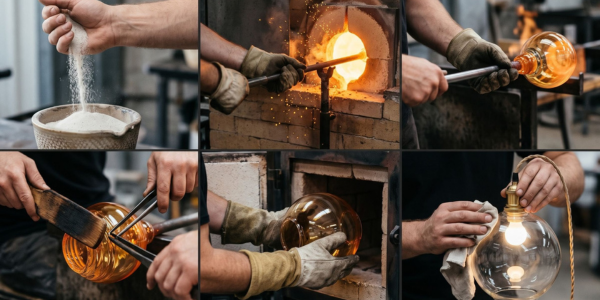
From sand to finished light
- Gathering: molten glass is gathered on a blowpipe, with extra layers added to build color, depth, and thickness from within
- Blowing and shaping: glass is shaped with breath, heat, gravity, and tools — free-form technique creates organic, one-of-a-kind shapes, while blown-assist adds control for repeatable forms
- Refining: while still hot, the artisan adds ribs, curves, texture, and proportion, directly controlling how the finished glass reflects and diffuses light
- Cooling: the piece cools slowly to release internal stress, protecting clarity, strength, and long-term durability
-
Finishing: each piece is polished, inspected, and prepared for lighting components — small variations are an expected part of handmade glass
Contemporary glass vs. Murano glass
- Contemporary glass is defined by clarity, controlled form, and refined finishes — clean and architectural, designed to interact beautifully with light while staying effortlessly modern
- Murano glass celebrates glass's more expressive nature — rich color, organic form, and the distinctive character that comes specifically from centuries of artisanal Murano craftsmanship
- Both are 100% recyclable, and because color is fused into the glass itself rather than applied as a surface finish, that color isn't easily lost the way a coating would be over time
Five ways glass treatment changes the light
- Clear glass: maximum transparency, revealing the bulb, structure, and reflections for a clean, architectural look
- Frosted glass: a matte surface that softens glare and creates a calm, comfortable glow
- Opal glass: fully opaque, hiding the light source entirely while spreading illumination evenly
- Smoked glass: a darker tone that adds shadow, warmth, and a more dramatic mood
-
Textured glass: ribs, bubbles, and surface patterns that bend light to create movement, reflection, and depth
What a specifier should know
- Impact and thermal shock
- Soda-lime glass (the base of most decorative lighting glass) is more prone to thermal shock than borosilicate
- Rapid temperature swings — a cold fixture suddenly hit by a hot bulb — carry the most risk
- Well-designed fixtures manage this through adequate clearance between glass and light source, which is why printed bulb wattage limits matter
- Hand-blown consistency
- Genuinely hand-blown pieces (free-form technique) show real variation in size, wall thickness, and form between units
- Expect roughly 5–10% dimensional variation as normal
- Blown-assist pieces, shaped with a mold for control, hold much tighter tolerances while keeping the handmade surface character
- Driver and dimming compatibility
- Most glass fixtures are LED-ready as standard now
- Dimming compatibility depends on the driver, not the glass
- 0-10V and ELV dimming are the most broadly compatible options if a project needs flexibility later
- Mounting weight
- A single small glass pendant typically weighs under 5 lbs and mounts on standard hardware
- Large blown-glass chandeliers or multi-globe installations can run well over 20–30 lbs
- These need a mounting point rated accordingly, plus in most cases a second installer for safe handling
- Cleaning
- A soft, dry microfiber cloth handles routine dusting
- For fingerprints or residue: diluted mild soap and water works on all treatments here except unsealed textured glass, where trapped grime may need a soft brush
- Avoid ammonia-based glass cleaners — they can dull colored or coated glass over time
Where it belongs
- Contemporary glass suits luxury residential and boutique hospitality projects wanting a clean, architectural material story
- Murano glass suits spaces wanting genuine artisanal character and expressive color, where the fixture itself becomes a design centerpiece
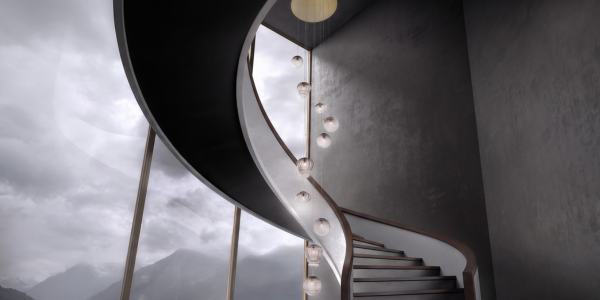
- Both work across luxury residential, boutique hotels, hospitality design, and contemporary public spaces, depending on which visual language a project needs
Glass doesn't just transmit light — it captures, reflects, colors, and reshapes it, changing character from day to night in a way few other lighting materials can match.
FAQ
What's the real difference between contemporary and Murano glass? Contemporary glass prioritizes clarity and controlled, architectural form; Murano glass celebrates expressive color and organic form through centuries-old artisanal technique — the choice comes down to which visual language a project needs.
Does glass lighting yellow or cloud over time? Quality glass, properly cared for, holds its clarity well over time; ask the manufacturer directly about expected long-term performance for the specific product.
Is Murano glass genuinely hand-blown, and does that affect consistency? Yes, and hand-blown construction means natural variation between pieces is expected — this is part of Murano glass's character, not an inconsistency to correct.
Is glass lighting compatible with LED and dimmable drivers? Most modern glass fixtures are, but confirm compatibility for the specific product, since driver requirements can vary by design.
How much weight can glass fixture mounting hardware support? It varies significantly by fixture size and glass type — always confirm mounting capacity and whether professional installation is recommended before specifying.
Other News Content by:
Lola Lighting
Alabaster vs. Concrete vs. Ceramic: Comparing Lola's Stone & Mineral Materials
Featured Products | September 24, 2026 | The Lighting ExchangeAlabaster Lighting: When Stone Learns to Glow
Design Tips & Techniques | August 18, 2026 | The Lighting ExchangeSilk — The Six Years Behind the Light
Design Tips & Techniques | July 10, 2026 | The Lighting Exchange